Market vs limit orders
Reirex LearnPublished Oct 3, 20262 min read


A market order buys now at the best price available. A limit order buys at your price or not at all. When to use which.

Key takeaways
- Market orders fill at once, but the price can slip.
- Limit orders control the price, but may not fill.
- A limit order that waits in the book pays the lower maker fee.
Market orders#
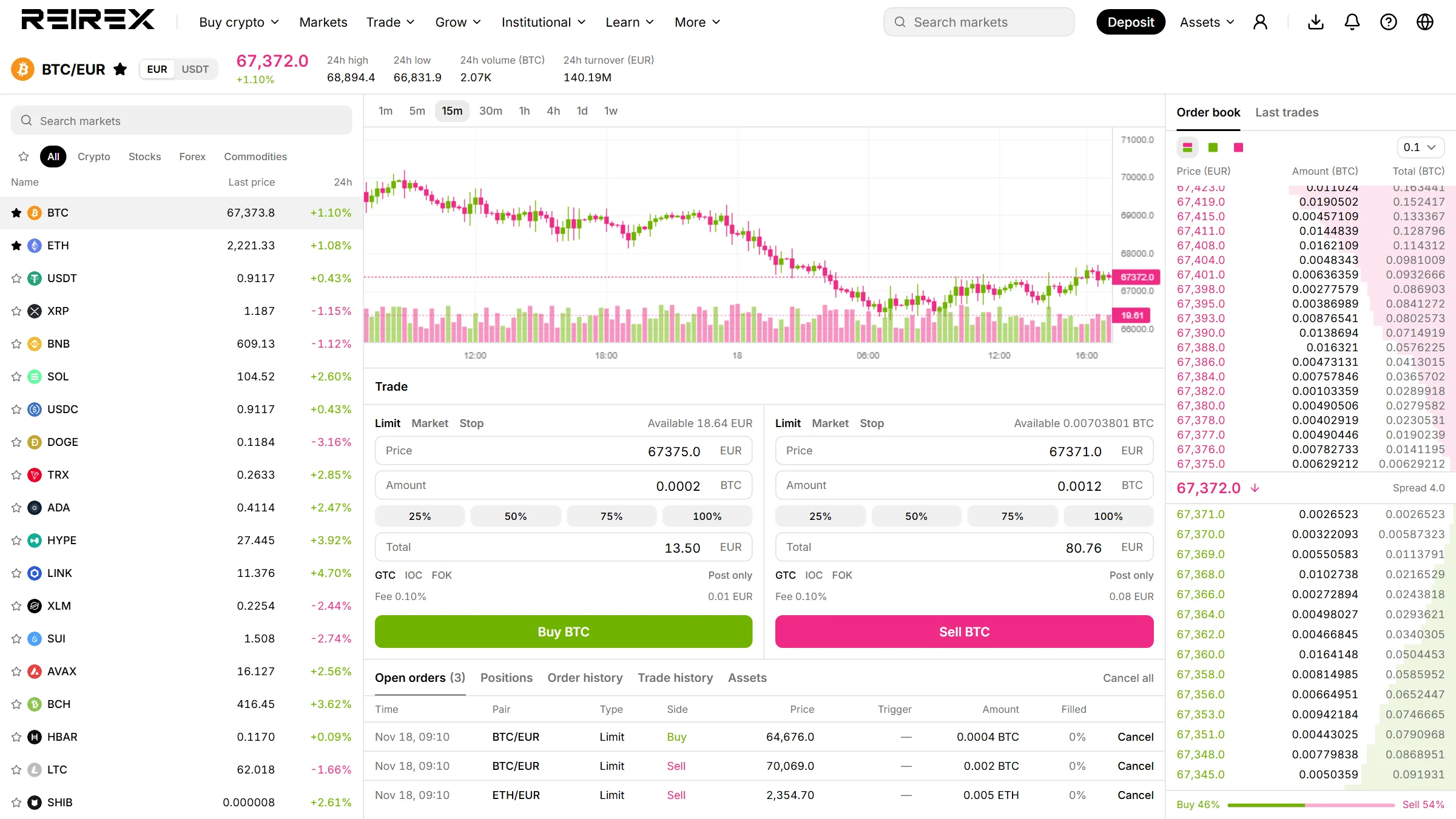
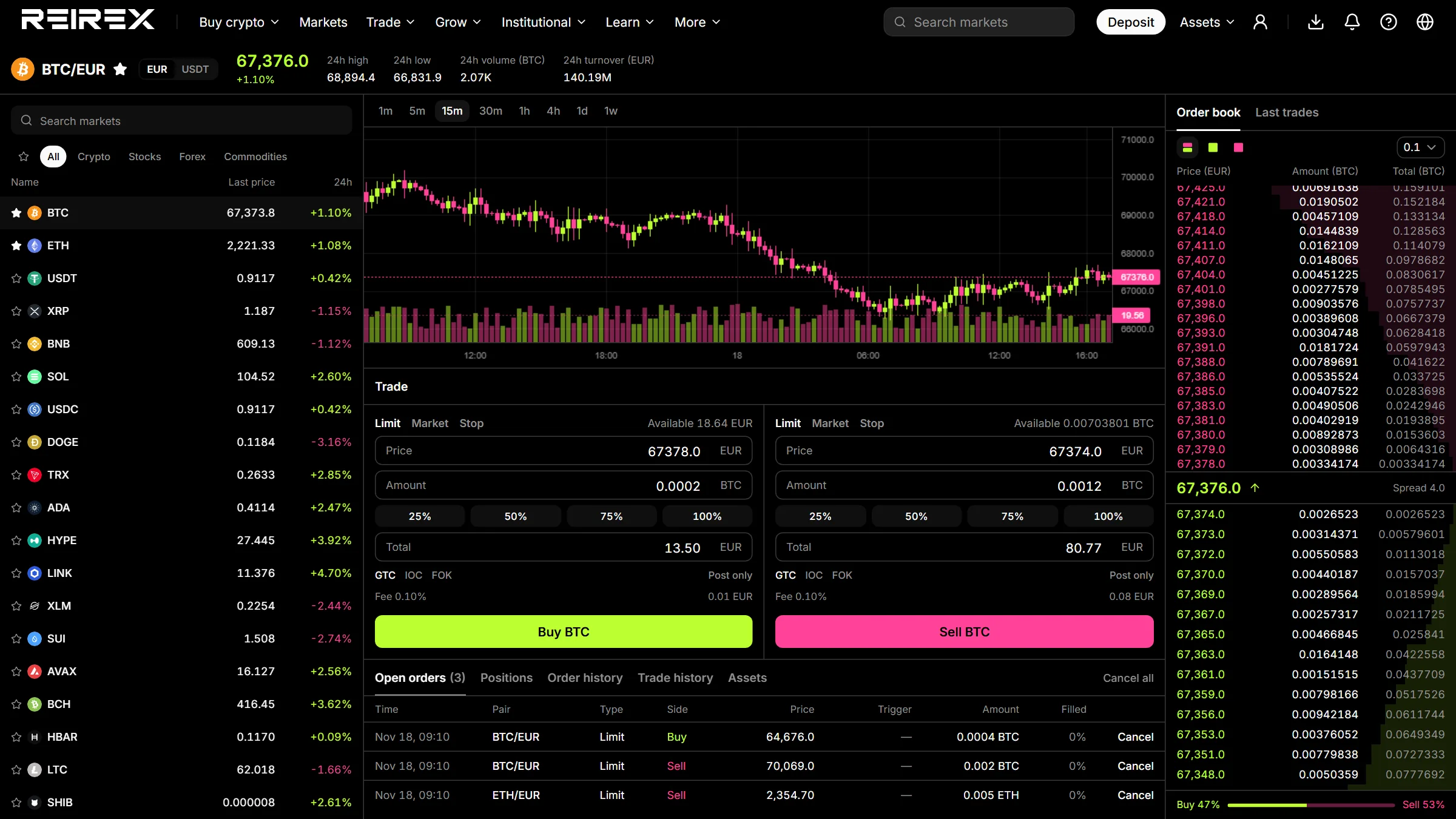
A market order fills straight away against the best prices waiting in the order book. You know it will fill; you don't know the exact price. In a thin or fast market, a large order can fill across several price levels, a cost called slippage.
Limit orders#
A limit order names your price: buy at €70,000 or less, sell at €75,000 or more. It fills only at that price or better, and waits in the book until it does or you cancel it.
| Market | Limit | |
|---|---|---|
| Fills | At once | When the price reaches yours |
| Price | Whatever the book offers | Yours or better |
| Terminal fee | Taker, 0.10 % | Maker, 0.08 %, when it waits in the book |
Which to use#
- Market: small orders in busy markets, when speed matters more than a few cents.
- Limit: large orders, quiet markets, or whenever you have a price in mind.
- Through the API you can also say how long a limit order may wait: until you cancel it, or only for an instant.
Practise both in the practice terminal, with 10,000 practice euros, before you trade real money.