Safe havens: where money goes in a storm


When markets panic, investors sell what is risky and buy what they trust to hold its value. The usual shelters, and their limits.

Key takeaways
- Gold, the US dollar, the Swiss franc and the Japanese yen tend to rise in a scare.
- A safe haven is safe compared with shares, not free of risk.
- Bitcoin has not behaved like one so far: in sharp sell-offs it has usually fallen with shares.
What makes a haven#
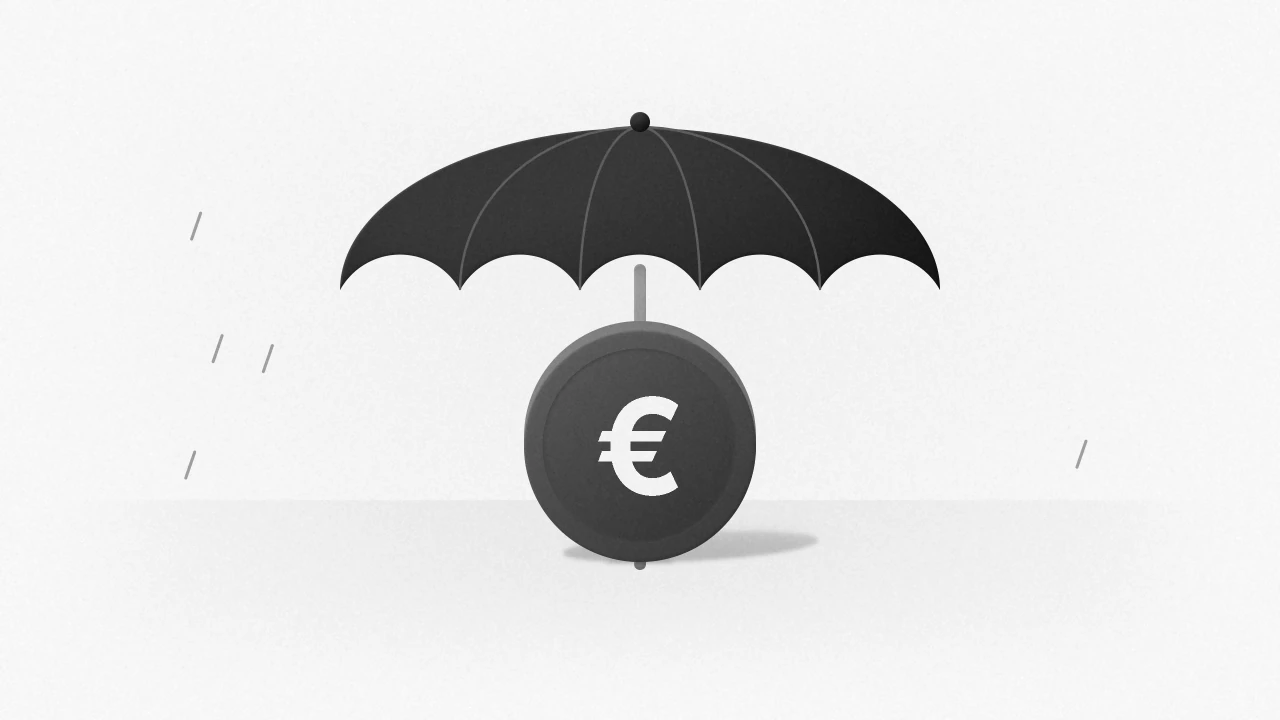
A safe haven is something investors expect to keep its value, or gain, while most other things fall. That takes a deep market, so it can be bought in size, and a long record of holding up when it mattered.
The usual shelters#
| Asset | Why investors trust it |
|---|---|
| Gold | Nobody's debt, limited supply, thousands of years of use |
| US dollar | The world's reserve currency and its largest bond market |
| Swiss franc | A stable country with low debt and low inflation |
| Japanese yen | Japan lends heavily abroad; in a scare that money comes home |
| Government bonds | Loans to the safest borrowers, such as Germany or the United States |
The limits#
Havens fail too. Gold fell together with shares in the first weeks of the 2008 and 2020 crashes, as investors sold whatever they could to raise cash, before it recovered. A haven currency can be weakened on purpose by its own central bank. And in calm years, sheltering costs you the returns you miss elsewhere.
What about Bitcoin?#
Its fixed supply invites the comparison with gold. So far the record says otherwise: in the sell-offs of March 2020 and of 2022, Bitcoin fell further than shares. It may earn the role in time; it has not yet.
Using havens#
Few investors manage to jump into havens when trouble starts: by then prices have moved. A small, steady holding of gold or cash does the job better. It is insurance, and like insurance it costs a little in the good years.