Moving averages, explained


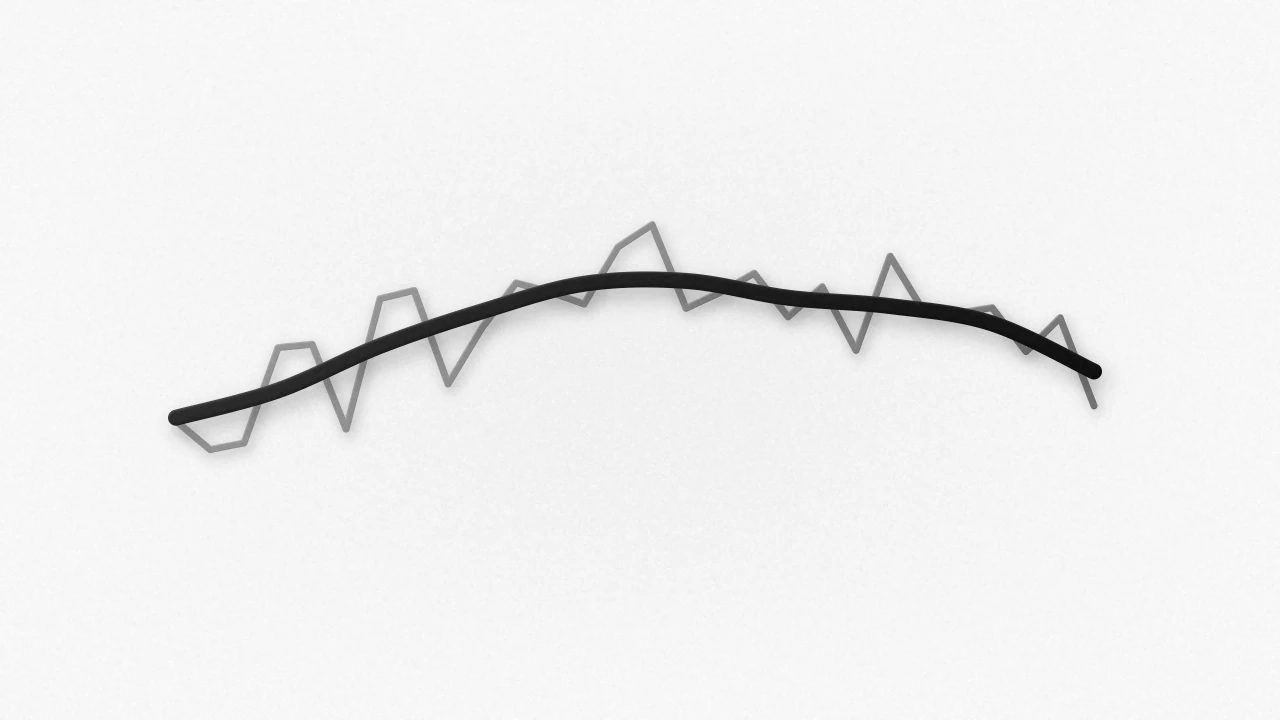
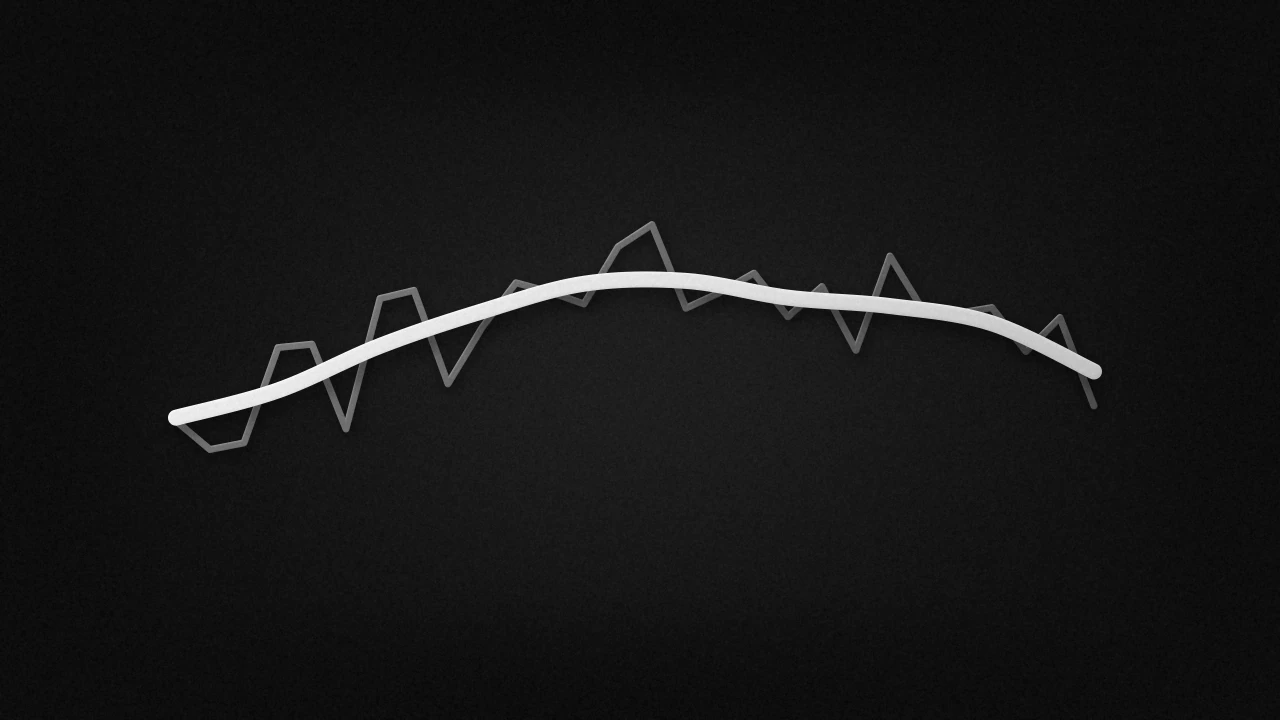
A moving average smooths a jumpy price into a line you can read. What the 50-day and 200-day lines show, and what they can't.
Key takeaways
- A moving average is the average price over the last so many days, worked out again each day.
- A price above a rising average signals an uptrend; below a falling one, a downtrend.
- Averages follow the price: they confirm a trend, they don't predict one.
Smoothing the noise#
Add the closing prices of the last 50 days and divide by 50: that is today's point on the 50-day moving average. Tomorrow the oldest day drops out and the newest comes in. The result is a line that ignores daily jitters and shows the direction underneath.
Short and long#
| Average | Shows | Used for |
|---|---|---|
| 20-day | The trend of recent weeks | Short-term trading |
| 50-day | The trend of recent months | Medium-term direction |
| 200-day | The long-term trend | Telling rising markets from falling ones |
Simple and exponential#
A simple moving average gives every day the same weight. An exponential one weights recent days more, so it turns sooner, at the cost of more false alarms.
Reading them#
- Slope: a rising line means buyers have had the upper hand over that period.
- Price against the line: in an uptrend, falls often stop near a rising average.
- Crossovers: the 50-day rising above the 200-day is called a golden cross, falling below it a death cross.
Their limits#
An average only knows the past. By the time a crossover appears, a good part of the move is over, and in a market going sideways the lines cross back and forth, giving one useless signal after another. They work best as a filter: a way to stay on the right side of a trend, not a trigger to act on alone.